Where to stay in Korea
Korea has a wider range of places to sleep than most countries its size, and several of them have no real equivalent elsewhere. Knowing what the categories mean is half the booking decision.
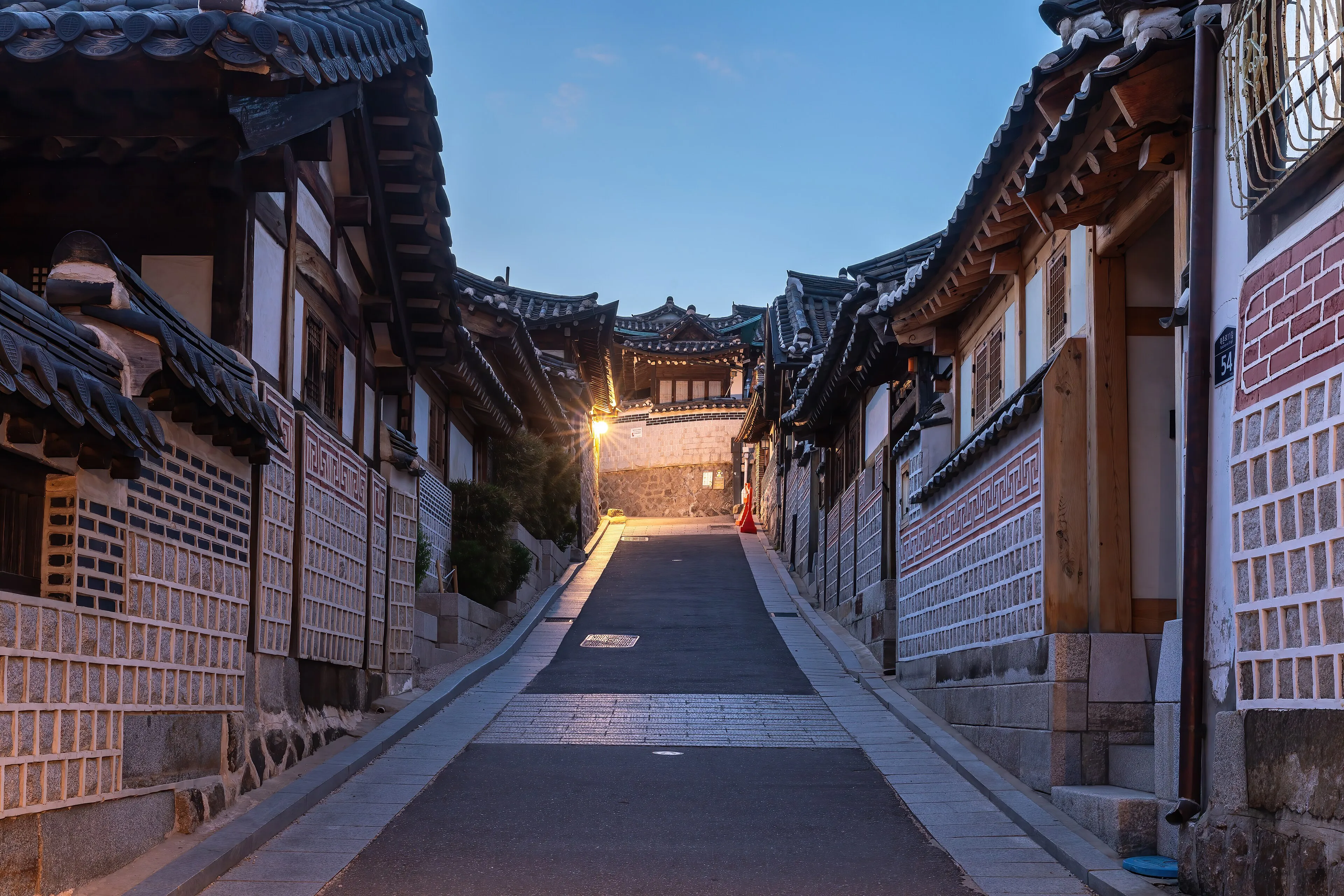
Accommodation in Korea is plentiful, clean and — outside central Seoul — inexpensive. The decision worth thinking about is not price but type, because several Korean categories do not map onto anything you will have booked before.
The familiar end
International and domestic chain hotels cover the top and middle of the market in every large city, and business hotels are the reliable default: small rooms, spotless, well located, priced sensibly. If you want to stop thinking about it, book one of these near a subway interchange and move on.
Motels
Korean motels are a category of their own. They grew out of the love-hotel trade and still carry some of the styling — themed rooms, dim lobbies, discreet entrances — but in practice they are ordinary budget hotels: private, well equipped, often with unexpectedly good bathrooms, and much cheaper than a hotel of similar comfort.
They cluster around bus terminals and entertainment districts. Most take walk-ins rather than online bookings.
Guesthouses and hostels
The backpacker end is well developed in Seoul, Busan and Jeju, with dorms and private rooms, communal kitchens and staff who speak English. In smaller towns, guesthouses are often the only option that will have an English-speaking host.
Hanok stays
A hanok is a traditional Korean house: timber frame, tiled roof, paper-screened doors, rooms arranged around a courtyard, and an ondol underfloor heating system that has been in use for centuries. A number have been converted into guesthouses, concentrated in the historic quarters of Seoul, Jeonju and Gyeongju.
You sleep on a mattress on a heated floor rather than a bed. It is atmospheric, it is genuinely Korean, and it is best taken in short doses.
Temple stays
Many Buddhist temples run overnight programmes for visitors, with simple lodging, vegetarian temple cuisine and an optional share of the monastic routine — early-morning chanting included. English-language sessions are offered at temples across the country.
Jjimjilbang
Not accommodation exactly, but Korea's 24-hour bathhouses have communal sleeping halls, and Koreans use them as an overnight option after a late night or an early train. For a few thousand won you get the baths, the saunas, a floor mat and a locker. It is not restful, but it is an experience and it is very cheap.
Choosing a location
In Korean cities, proximity to a subway station matters more than proximity to a specific sight. Seoul is large but the network is dense; a hotel two stops further out but next to a station will usually beat one that is nominally central and a fifteen-minute walk from anything.
For the neighbourhood-by-neighbourhood view, start with Seoul, Busan and Jeju.
More guides on the way
These pages are being written right now. They will appear here as soon as they are published.
- Hotels
- Hanok stays
Common questions
Where should I base myself in Seoul?
Anywhere within a few minutes' walk of a subway station, which is most of the city. Beyond that it is a question of character: the historic centre for palaces and markets, the university districts for nightlife and food, Gangnam for shopping and business.
Are Korean motels respectable?
Yes. The love-motel origins still shape the decor, but they function as ordinary budget hotels — clean, private, well equipped, and cheap. They rarely take advance bookings from abroad and rarely need to.
Is a hanok stay worth it?
For a night or two, yes. Sleeping on a heated ondol floor in a courtyard house is a genuine experience of Korean domestic architecture. For a full week, most people miss the bed and the bathroom.