Airports and flights
Almost every visitor lands at Incheon. Almost every domestic flight leaves from Gimpo. Knowing which is which — and that they are not the same airport — saves a genuinely stressful morning.
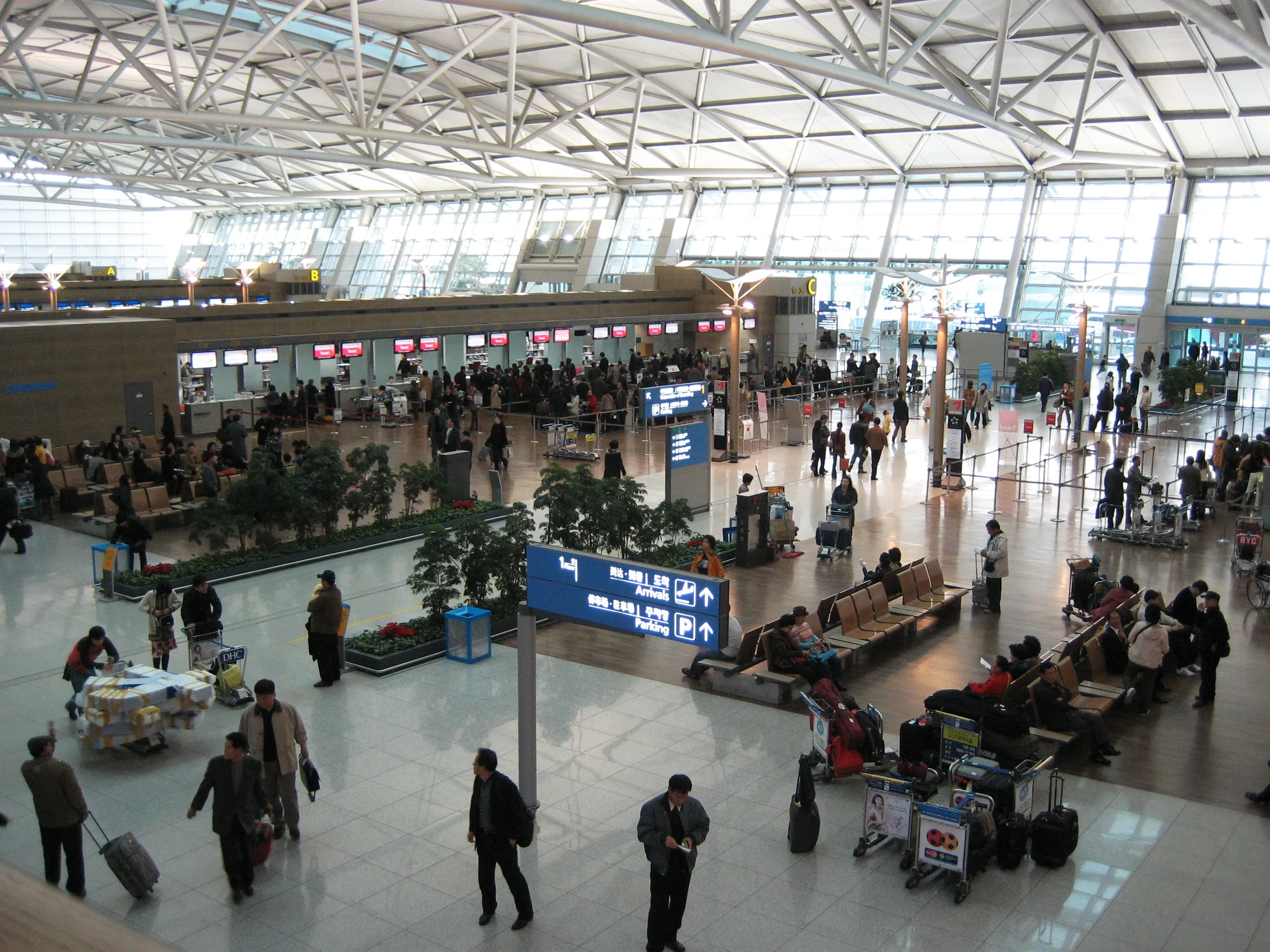
Seoul is served by two airports, and they do different jobs. Confusing them is the most common logistical mistake first-time visitors make in Korea, because a domestic connection booked out of the wrong one turns a short hop into a two-hour cross-city scramble.
Incheon, the international gateway
Incheon handles essentially all long-haul traffic and consistently ranks among the best-regarded airports in the world. It sits on an island west of the city, connected by bridge and rail, with two passenger terminals — check which one your airline uses before you set off in either direction, because they are far enough apart to need a shuttle.
Two things are worth knowing on arrival: the airport is a good place to pick up a transit card and a data plan in one stop, and the rail link into the city is faster and more predictable than the bus at almost every hour.
Gimpo, the domestic workhorse
Gimpo is the original Seoul airport, much closer to the centre, and now mostly domestic. It also runs short international routes to a handful of nearby Asian cities — which makes it a quietly excellent choice if you are arriving from Tokyo, Osaka, Shanghai, Beijing or Taipei.
The Seoul to Jeju route out of Gimpo is one of the busiest passenger air corridors anywhere. Flights run constantly, competition keeps fares low, and booking a week ahead is usually enough outside holiday periods.
Getting into the city
The airport railway connects both airports to Seoul Station, with an express service and an all-stop service from Incheon; the all-stop is slower but connects to more of the subway network, which can be the faster option depending on your final destination.
Limousine buses run from both airports to stops across the city and are the better choice if you have heavy luggage or your hotel sits far from a station. Taxis are available around the clock and cost several times the train.
Beyond Seoul
Busan, Jeju and several regional cities have their own airports handling domestic and short international routes. For travel within the mainland, though, the train usually wins once you count check-in and transfer time — flying inside Korea makes sense mainly for the islands.
More guides on the way
These pages are being written right now. They will appear here as soon as they are published.
- Incheon airport
- Gimpo airport
Common questions
How long does it take to get from Incheon to central Seoul?
Around an hour door to door by the airport rail link, longer by limousine bus depending on traffic and where in the city you are heading. Allow more than you think for the reverse journey on a weekday morning.
Can I transfer between Incheon and Gimpo?
Yes, and it is straightforward by rail or bus, but it is a real journey across the western edge of the metropolis. If you have a domestic connection out of Gimpo on arrival day, give yourself several hours.
Which airport should I fly into?
You rarely get a choice on long-haul — that is Incheon. Gimpo is worth looking at if you are coming from Tokyo, Osaka, Shanghai, Beijing or Taipei, because it puts you much closer to the city.