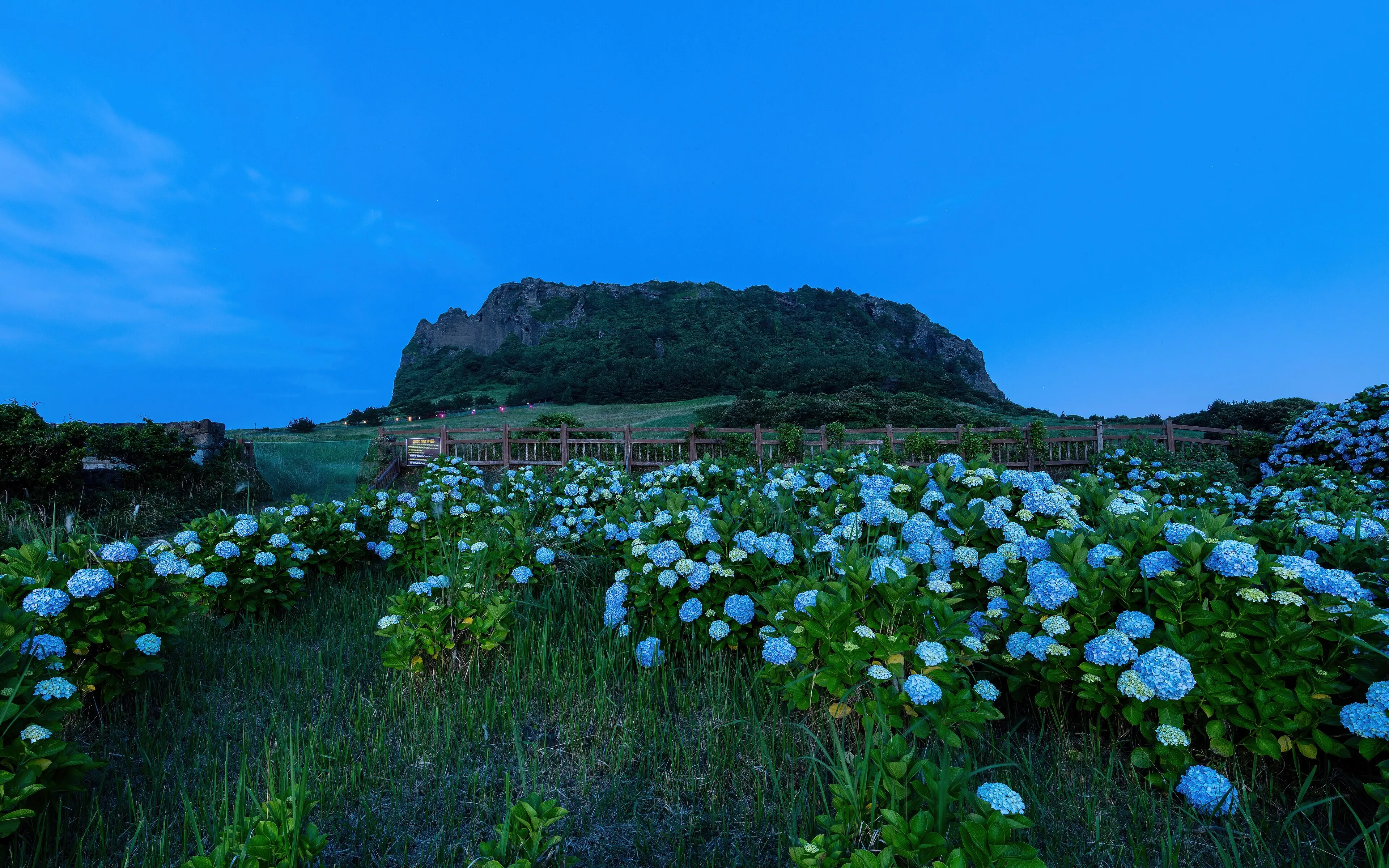
Jeju Island
A volcanic island off the south coast, built around a single mountain, and the one place in Korea where most visitors rent a car — because the best of it is between the towns.
Photo: Basile Morin, CC BY-SA 4.0, via Wikimedia Commons
Jeju sits about ninety kilometres off the southern coast, and it is geologically and culturally distinct from the mainland: a shield volcano that rose out of the sea, with a language of its own, a matrilineal diving tradition, and stone everywhere — in the walls, the houses and the grandfather statues at the gates.
It is Korea's holiday island, which means it is busy, well organised, and worth the effort anyway.
Hallasan
The mountain is the island. At 1,947 metres it is the highest point in South Korea, and its crater lake sits at the summit. Several trails climb it, of varying length and difficulty, all of them day hikes with enforced start and turnaround times.
Around its base, the slopes carry a national park's worth of forest, and the volcanic activity that built the mountain also left the island riddled with lava tubes — long basalt caves, some open to visitors, collectively part of the UNESCO World Heritage listing that covers the island's volcanic features.
The coast
Seongsan Ilchulbong, the "Sunrise Peak", is a tuff cone that erupted out of the sea on the eastern tip and is now joined to the island. Climbing it at dawn is the standard Jeju photograph, and it earns its reputation.
Elsewhere the coastline alternates between black basalt shelves, columnar cliffs, and short beaches of pale sand. The Jeju Olle Trail links most of it — a waymarked long-distance route broken into more than twenty numbered sections, each walkable in a day, running almost entirely around the island's rim.
The haenyeo
Jeju's women divers free-dive for shellfish and seaweed without breathing apparatus, working in cold water into old age. The tradition is centuries old, is recognised by UNESCO as intangible cultural heritage, and is now sustained by a small and ageing group.
You can see them working from parts of the coast, and there are museums and demonstrations. It is worth understanding rather than just photographing: the haenyeo shaped the island's economy and its unusually strong tradition of female household authority.
Eating
Jeju's food follows from its geography. Black pork from the island's own pigs, grilled over charcoal. Abalone, in porridge and on the grill. Hairtail fish, raw or braised. And tangerines, which grow all over the island and turn up in everything from chocolate to beer.
Practicalities
Fly in from Gimpo — see airports and flights — and pick up a car at the airport. The island is small enough to circle in a day and interesting enough to spend a week on.
Weather is the variable that matters. Jeju is windier and wetter than the mainland, cloud sits on Hallasan for much of the year, and a plan that depends on one clear morning is a plan that will disappoint. Build in slack. The rest of getting around Korea applies once you are back on the mainland.
Common questions
How do I get to Jeju?
By air. The Seoul to Jeju route is one of the busiest in the world, flights run all day from Gimpo, and fares are low. Ferries also run from several mainland ports, but they take most of a day.
Do I need to rent a car?
Most visitors do. Buses connect the towns and the main sights, but Jeju's appeal is in the coast roads, the trailheads and the small villages, and those are awkward without a car.
Can I climb Hallasan in a day?
Yes — the summit trails are long day hikes rather than expeditions, but they have strict cut-off times for starting the ascent and turning back, and the weather at the top is its own thing. Check conditions before setting out.